About the Project
Buses keep our region moving, providing more than 500,000 trips each day. Through the Network Redesign, we took a fresh and detailed look at our bus service and routes to serve you better.
In 2022, Metro launched the Better Bus Network Redesign project, the first comprehensive redesign of Metrobus service in its 50-year history. Through three years of research, planning, and outreach, Metro developed the 2025 Better Bus Network, which launched June 29, 2025.
The network was developed to:
- Better connect people to where they want to go
- Provide more frequent, consistent bus service
- Advance access to opportunity for Equity Focus Communities
- Make bus service easier to understand
- Prepare us for the future
Watch this video to learn about how we used data, partnerships, and feedback from you-our customers and community members-to create a fast, frequent, equitable, and reliable bus network that is easier to use and prepares us for the future.
The Need for a Better Bus Network
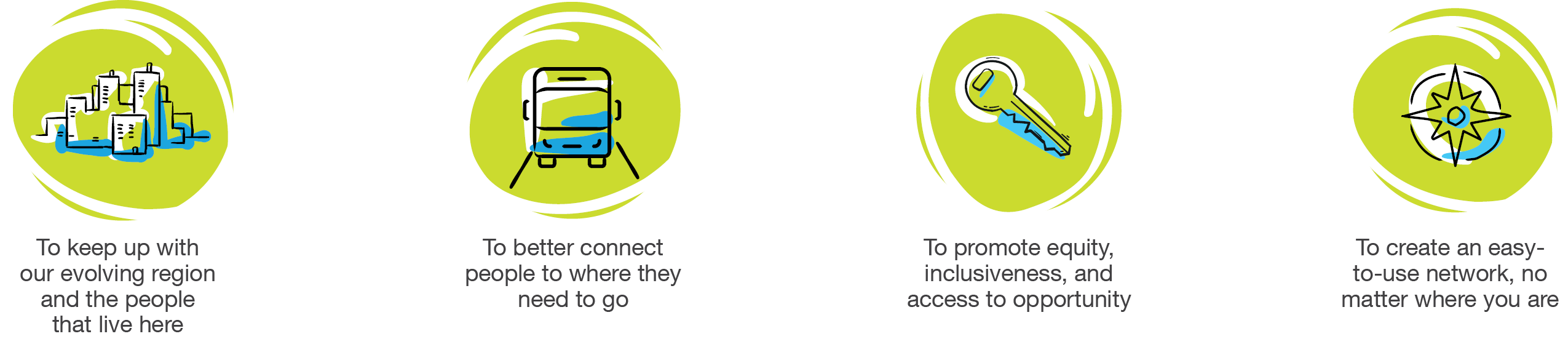
This project is the first comprehensive redesign of the entire Metrobus network since its creation. As part of the effort, Metro also supported its partner agency in Prince George's County (TheBus) in redesigning their local bus network. This project presented the opportunity to achieve the following:
Keep up with our changing region and the people that live and work here. Our region adds approximately 3,000 people and 2,200 jobs, every month. Bus service needs to better align with changes to where and when people want to travel. Better Bus also considers ways to align bus service with bus priority investments such as bus lanes and transit signal priority.
Better connect people to where they need to go. About half of our region lacks access to frequent transit service. Buses keep our region moving, but more and more often are getting stuck in traffic, making service slower and less reliable. Speeding up bus trips will make it easier and faster for customers to get around the region.
Promote equity, inclusiveness, and access to opportunity. Sixty percent of Metrobus customers are low income, 1 and 83 percent are people of color. The redesign effort was an opportunity to create a more equitable transit network that serves our communities, including the needs of essential workers.
Create a network that is easy to use no matter where you are. In the Washington region, Metro operates about 200 Metrobus routes, while seven other transit providers operate another 250 bus routes. While that means lots of ways to get around, the overall system can be difficult to understand.
1 200% of the Federal Poverty Level
Getting to Better
The Network Redesign put customers at the forefront. We used data-driven analysis and a robust, interactive public engagement process to evaluate and make changes to Metrobus service. Throughout the process, we heard from customers and communities across the region.
We broke up the project into three phases to ensure we collaborated with customers and the community at key milestones of the process.

Phase 1 - Gathered & Analyzed Data and Set Goals & Priorities
We began in fall 2022 by setting goals and priorities for the new network. Your input combined with data about where, when, and how people use the bus today was used to help shape the draft Visionary Network in Phase 2. During this phase, we also created the technical and policy foundations needed for this project, including the following:
Market Assessment: Determined how well current bus service meets community needs and identified what customer trips could best be served by a redesigned transit network. We looked at travel patterns and demographic data that highlighted:
- Areas with high likelihood to need and use transit
- Gaps with low transit access to key destinations
- Factors contributing to lower transit usage
Transit Service Assessment: Looked at how bus services operate today and identified specific opportunities for improvement by using data from existing and pre-COVID conditions to see how each route is performing in terms of ridership, reliability, cost-effectiveness, serving low-income customers, customers of color, and other metrics.
Development of Goals, Objectives, Metrics: After reviewing existing policies and previous plans, like the Bus Transformation Project and #YourMetro, The Way Forward, and incorporating priorities identified from customers, the community, and stakeholders through our engagement, we developed goals, objectives, and metrics that will guide development of the new bus network.
Watch this video to learn three interesting tidbits we found from our analysis.
Phase 2 - Developed the Draft Visionary Network
In spring 2023, Metro presented a draft Visionary Network to the public and stakeholders for feedback. The draft Visionary Network included changes to where routes can go, how often the bus arrives, and the times of day and week the bus operates. This network was created using public, stakeholder, and bus operator input; data and ridership analysis; and a travel demand assessment. The draft Visionary Network was designed to provide convenient, easy-to-use, reliable bus service that matches when and where people want to travel and increases access to opportunity for historically disenfranchised residents and communities.Phase 3 - Proposed 2025 Better Bus Network
In spring 2024, Metro presented the proposed 2025 Better Bus Network to the public and stakeholders for feedback. The proposed 2025 Network was created using your input and represents Metro's commitment to improving service and connections using the resources we have today. The proposed 2025 Network delivers a strong first step towards the Visionary Network. It includes the most beneficial new connections, increased frequency, and extended hours of service during the day and on weekends. As resources become available, Metro will continue to advance the Visionary Network through service extensions and more frequent service.- A network of bus routes that better connect the region
- Improved service, especially during evening and on weekends
- New route names
- More efficient bus stop spacing
Implementation
We used your input to finalize the 2025 Network, which was approved by Metro's Board of Directors in November 2024. Metro will begin implementing the network on June 29, 2025.Community Connections Committee
The Community Connections Committee (CCC) represents the diversity of our communities and a variety of perspectives. CCC members hold leadership positions in community-based organizations, businesses and business groups, groups representing people of color and people with disabilities, labor organizations, advocacy groups, and others. Members of the CCC provided insight into the communities they represent related to bus service in the region and helped extend the reach of our community engagement.Technical Committee
The project's Technical Committee (TC) includes staff who have a firsthand understanding of all components of planning and operating bus service. The TC consists of Metro staff as well as staff from other transit service providers in the region. The TC met and provided input at key milestones in the network redesign process.