Escalator Replacement
Did you know that the top five longest escalators in the United States are Metro escalators? The longest escalator, located at Wheaton Station, is 230 feet long! Replacing these world-record escalators requires careful planning and execution.
Metro's first escalator replacement contract in 2011 delivered 145 brand new escalators in eight years. As a result of that project, the average age of our escalators decreased from 27 years at the start of the project to just over 11 years by the end.

In 2021, we kicked off a second project that will replace 139 escalators across 34 stations by 2028. The new escalators are more durable and reliable, and feature LED lighting and UV-C disinfection, providing a safer and smoother trip for you. Since the most recent project began, escalator failures reduced by nearly 30% systemwide.
Our goal is to keep you moving quickly, safely, and reliably by installing brand new, more durable escalators where you need them the most. On average, a single escalator replacement process has five main steps and takes approximately 25 weeks. Review our escalator replacement process chart or read below to learn more!
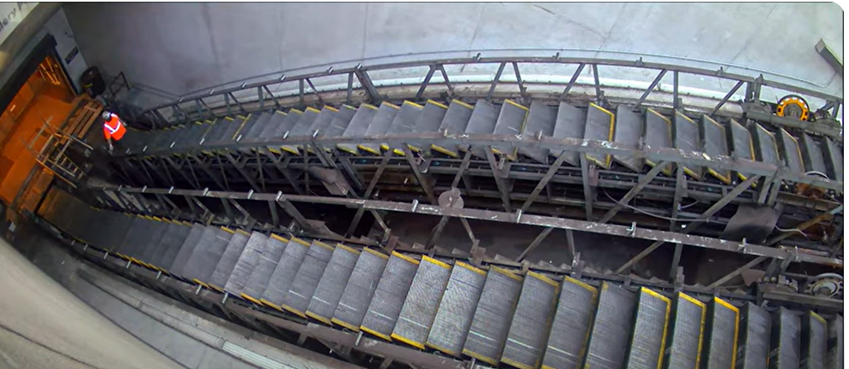
- Pre-construction: 2-3 weeks
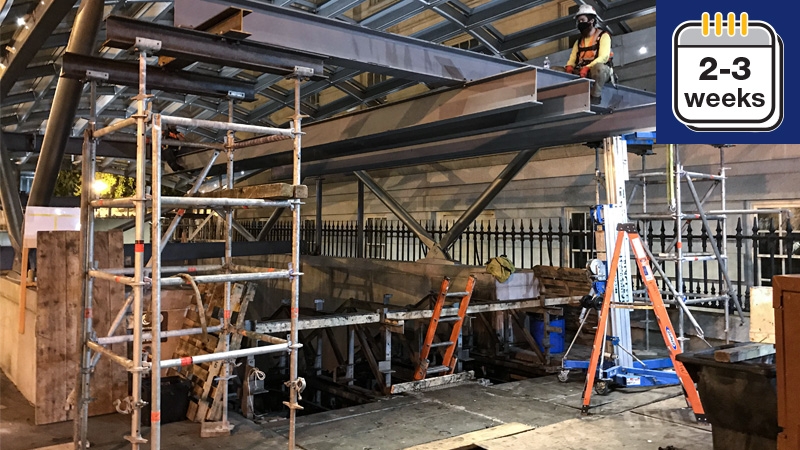
- Each escalator is custom designed and fabricated to fit the station.
- Construction barricades are installed to create a safe work area.
- Components like steps, handrails, and decking are removed until only the frame of the escalator remains.
- Custom hoisting systems are installed to lift heavy equipment and escalator sections.
- Hoisting Out: 1-2 weeks
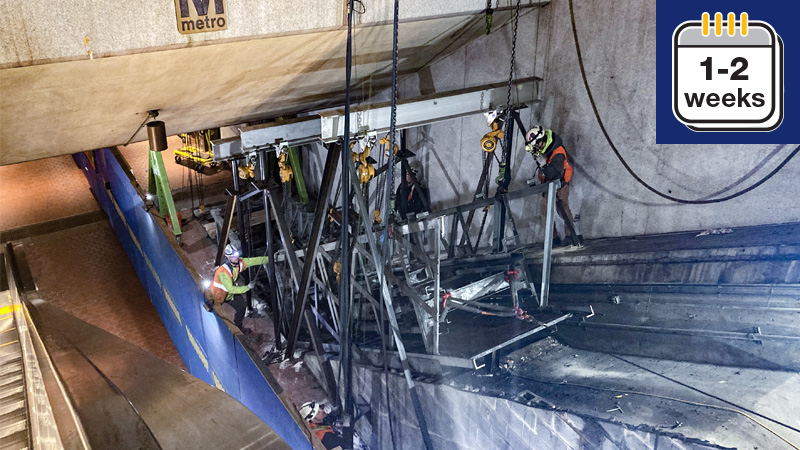
- The old escalator frame is cut and hoisted out in sections.
- Sometimes street level escalators are used as a chute to remove other, deeper escalators from the station.
- The wellway is inspected and any structural issues are identified and addressed.
- This phase of construction typically occurs at night when the station is closed.
- Hoisting In: 1-2 weeks
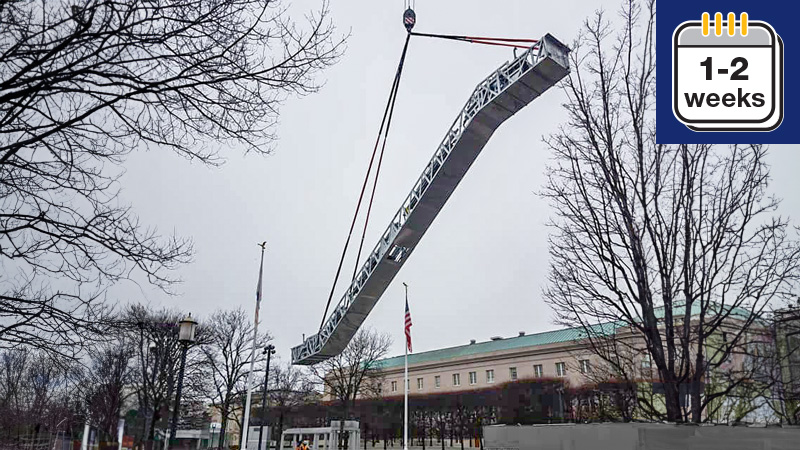
- The new escalator frame arrives in sections.
- The sections are hoisted into the wellway and bolted together until the entire frame is assembled.
- This phase of construction typically occurs at night when the station is closed.
- Build Out: 10-17 weeks
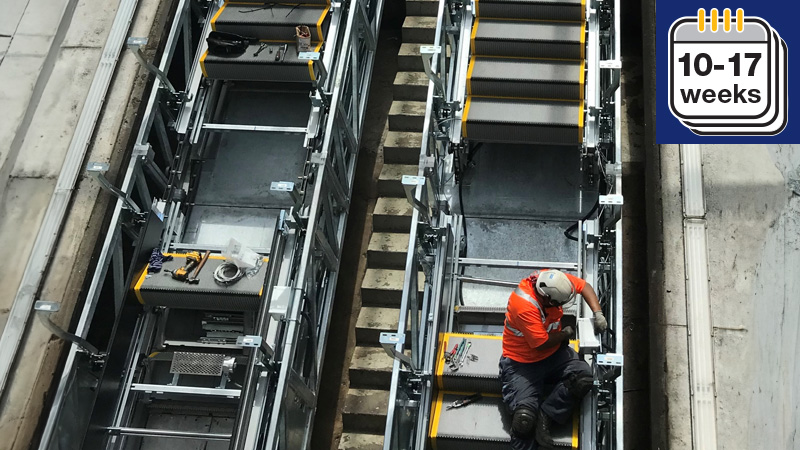
- New electrical wires, controllers, and equipment cabinets are installed.
- Additional escalator components such as handrails, steps, and LED lighting are added.
- Testing & Inspection: 1 week
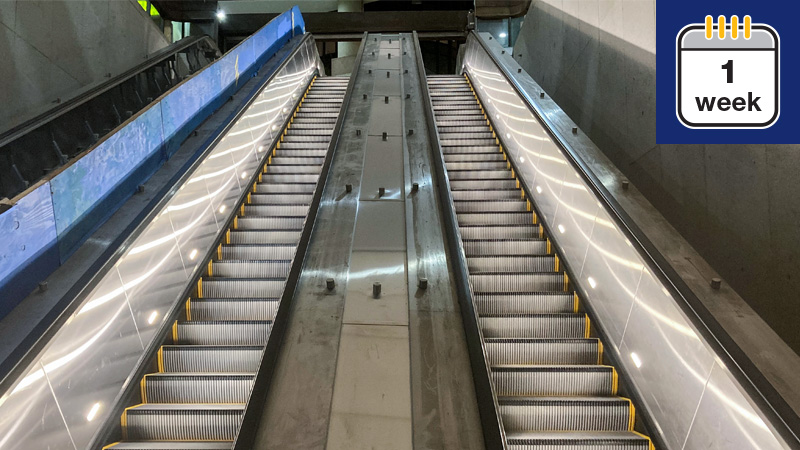
- The new escalator must run continuously for 20 hours in each direction.
- A jurisdictional inspector tests and inspects the escalator's operation and safety devices before issuing a certificate for public use.
- Barricades are removed and the escalator reopens.
Several Metro stations have active escalator replacement projects. Pay attention to posted signage at your station. We will notify you ahead of every long-term escalator closure.
The escalator replacement project hit the 50% completion milestone in December 2023. By December 2028, 139 escalators at 34 stations will be replaced.
We are frequently completing escalator replacements across the system. See which stations received new escalators since 2021:
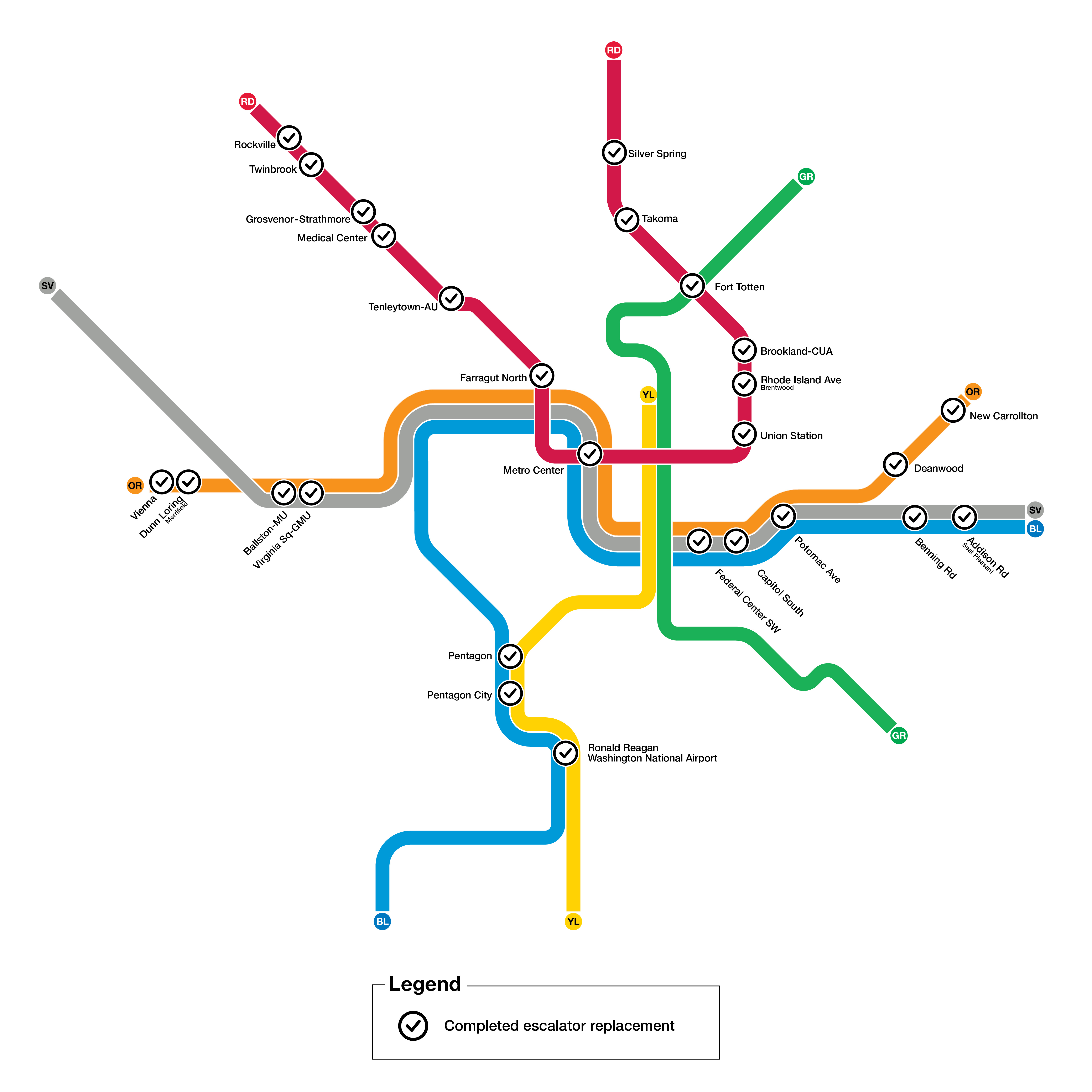
Completed escalator replacements as of August 19, 2025.
Photo Gallery
Escalator Replacement
-
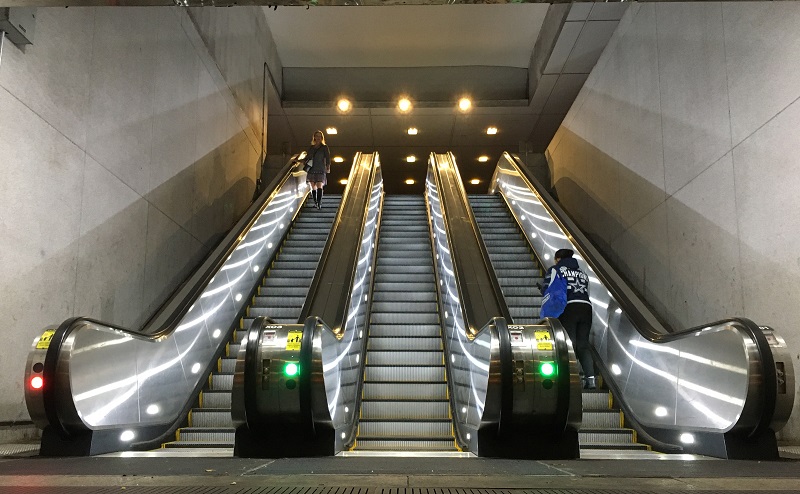
Brand-new escalators at Court House, October 2019 -
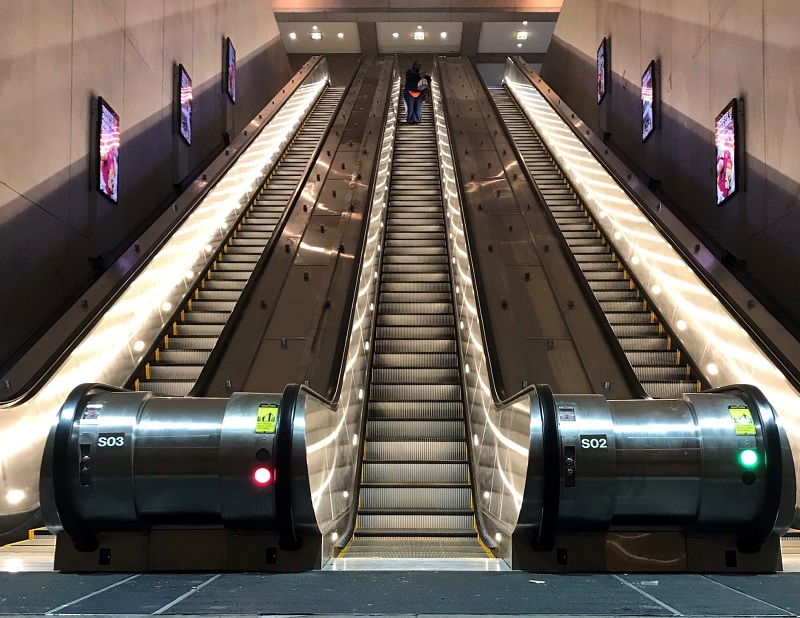
Brand-new escalators at Metro Center south, May 2023 -
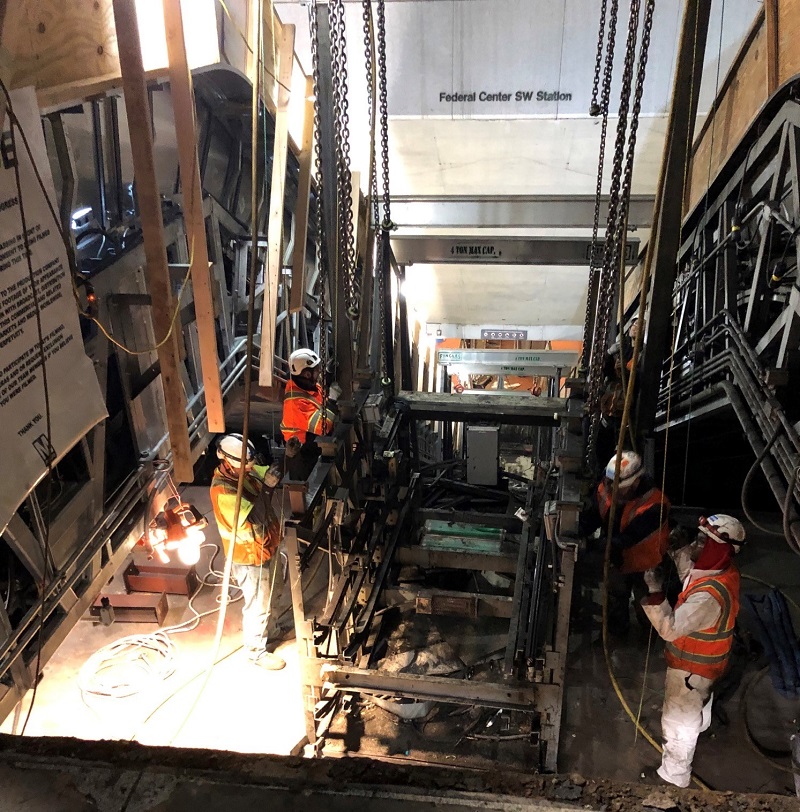
Construction of new escalator at Federal Center SW, January 2022 -
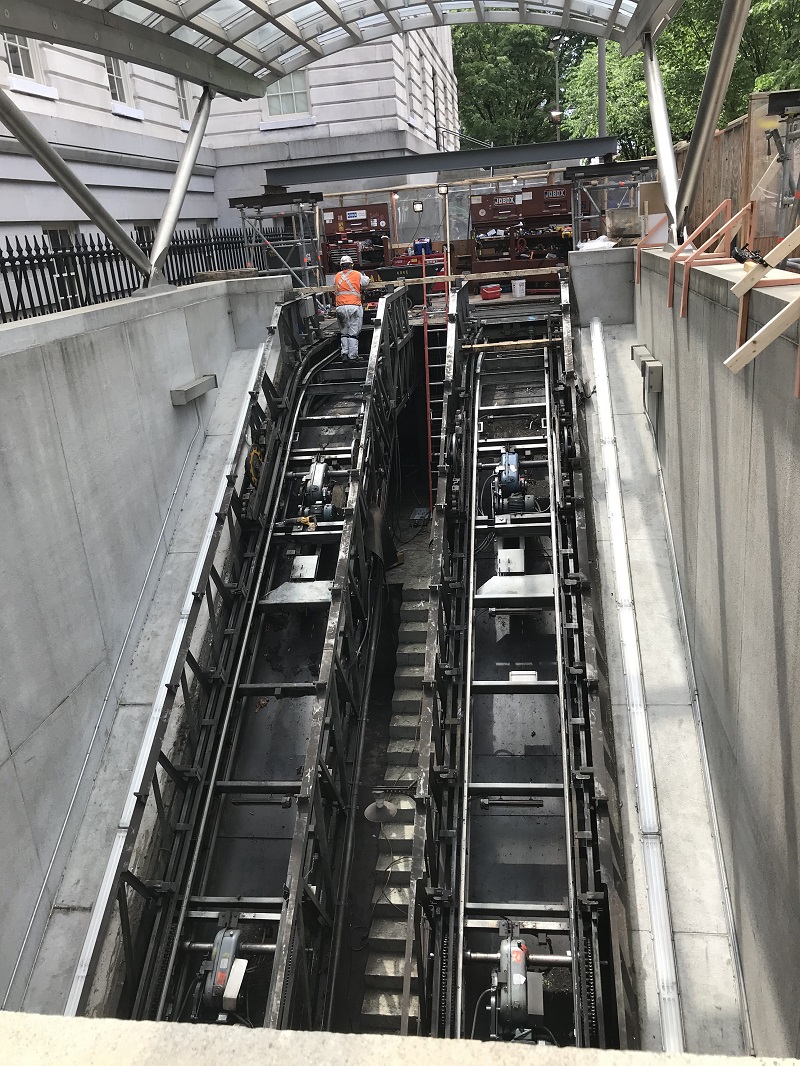
Demolition of the escalators at Gallery Place west entrance, May 2021 -
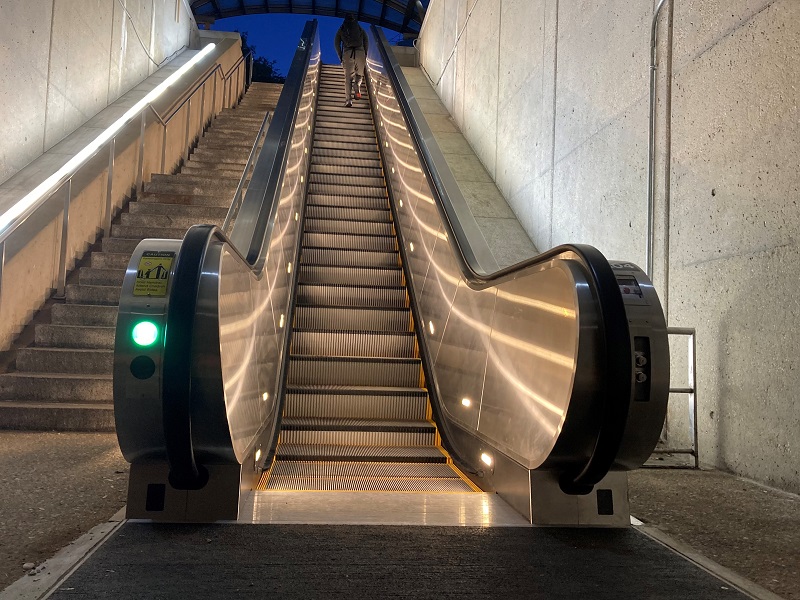
Escalator replacement at Brookland Station, May 2022 -
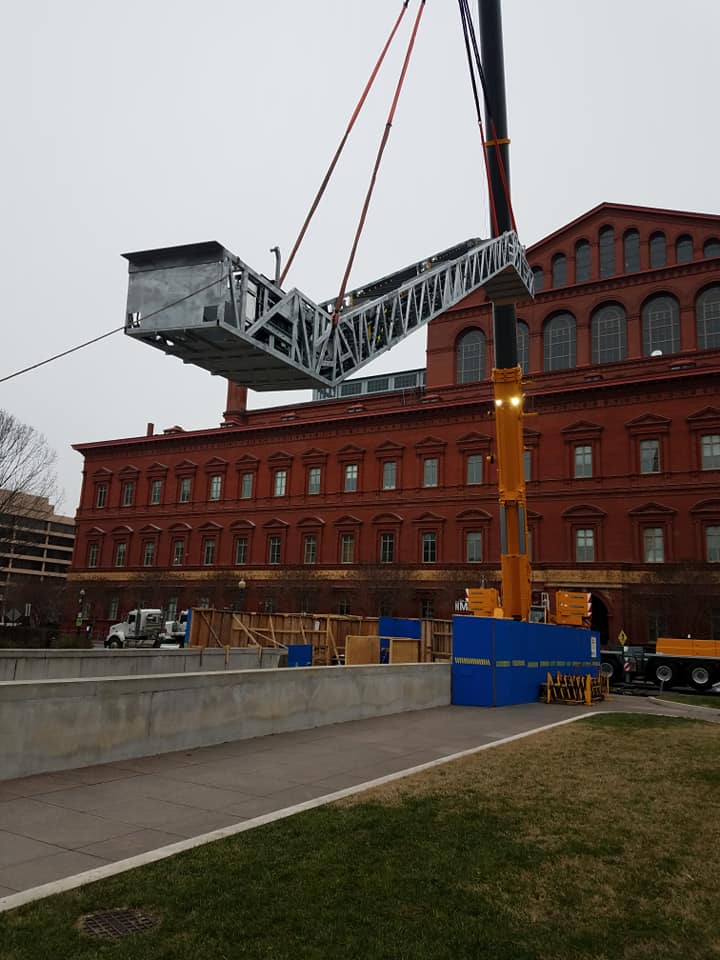
Hoisting in the new escalator at Judiciary Square, December 2017 -
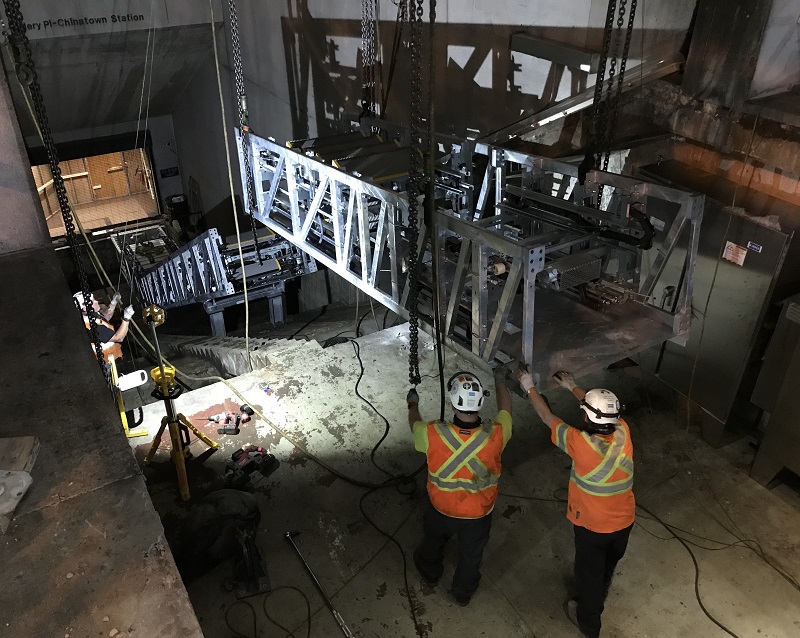
Rigging in new escalators at Gallery Place West, May 2021 -
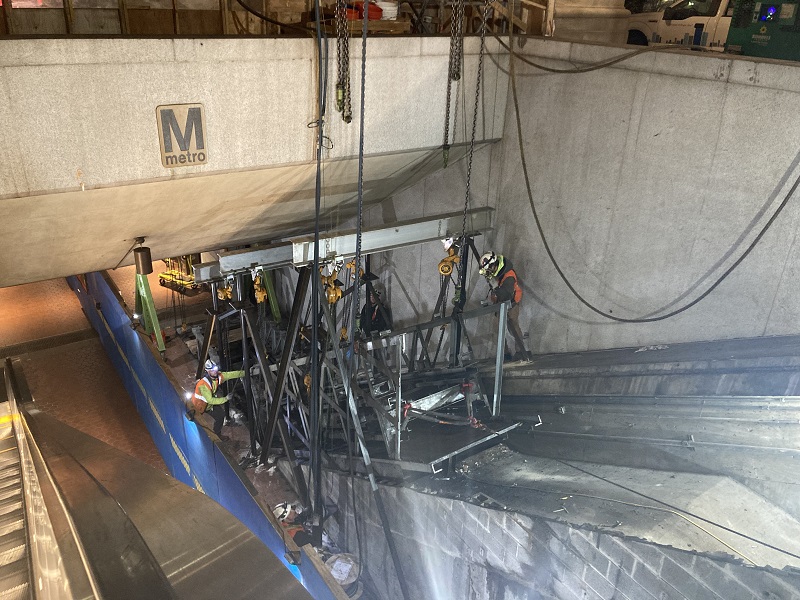
Truss removal at Union Station, February 2023 -
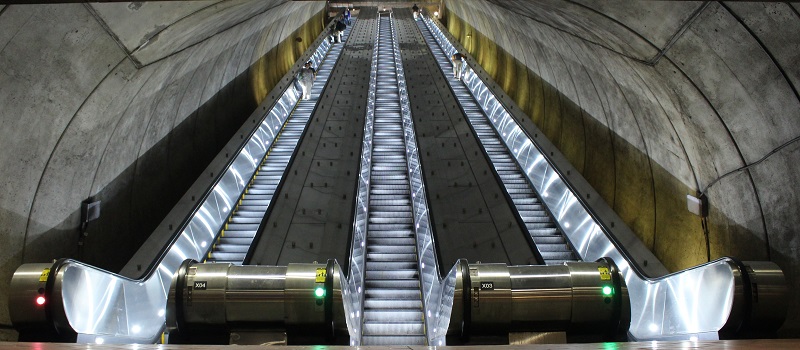
Brand-new escalators at Bethesda Station, March 2017