Metro, Rushmark Properties, EYA launch major transit-oriented redevelopment at West Falls Church
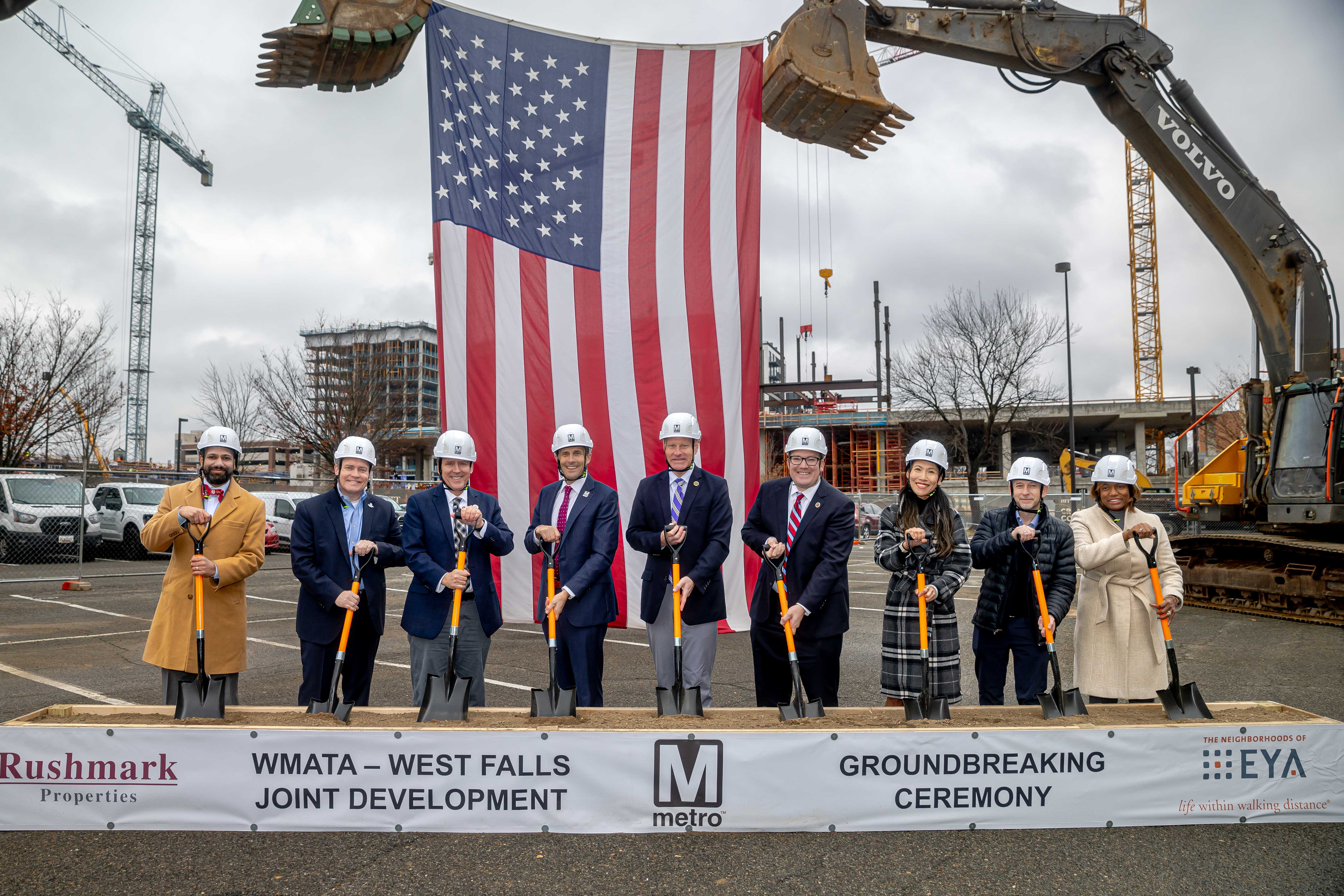
Metro, Rushmark, EYA, and local officials break ground on the new development at West Falls Church.
From left to right: Vice President of Rushmark Properties Neal Kumar, Metro Alternate Board Member and Arlington County Board Vice Chair Matt de Ferranti, Fairfax County Board Supervisor and Metro Board Member Walter Alcorn, Metro General Manager Randy Clarke, Fairfax County Board of Supervisors Chair Jeffrey McKay, Fairfax County Board Supervisor James Bierman, Jr., Falls Church Mayor Letty Hardi , EYA Executive Vice President Evan Goldman, and Metro Acting Vice President of Real Estate and Development Nia Rubin.
Metro along with development partners Rushmark Properties and EYA, LLC, and Virginia elected officials broke ground today on a dense, mixed-use community where residents can live, work, and play just steps from the West Falls Church Metrorail Station.
The Falls Church Gateway Partners will transform 24 acres of Metro-owned parking lots into a vibrant neighborhood that enhances transit accessibility and supports affordable housing.
The project will be developed in three phases and include up to 1 million square feet of new residential, office, and retail space. The residential portion will feature up to 810 apartments and 82 townhomes with affordable housing components.
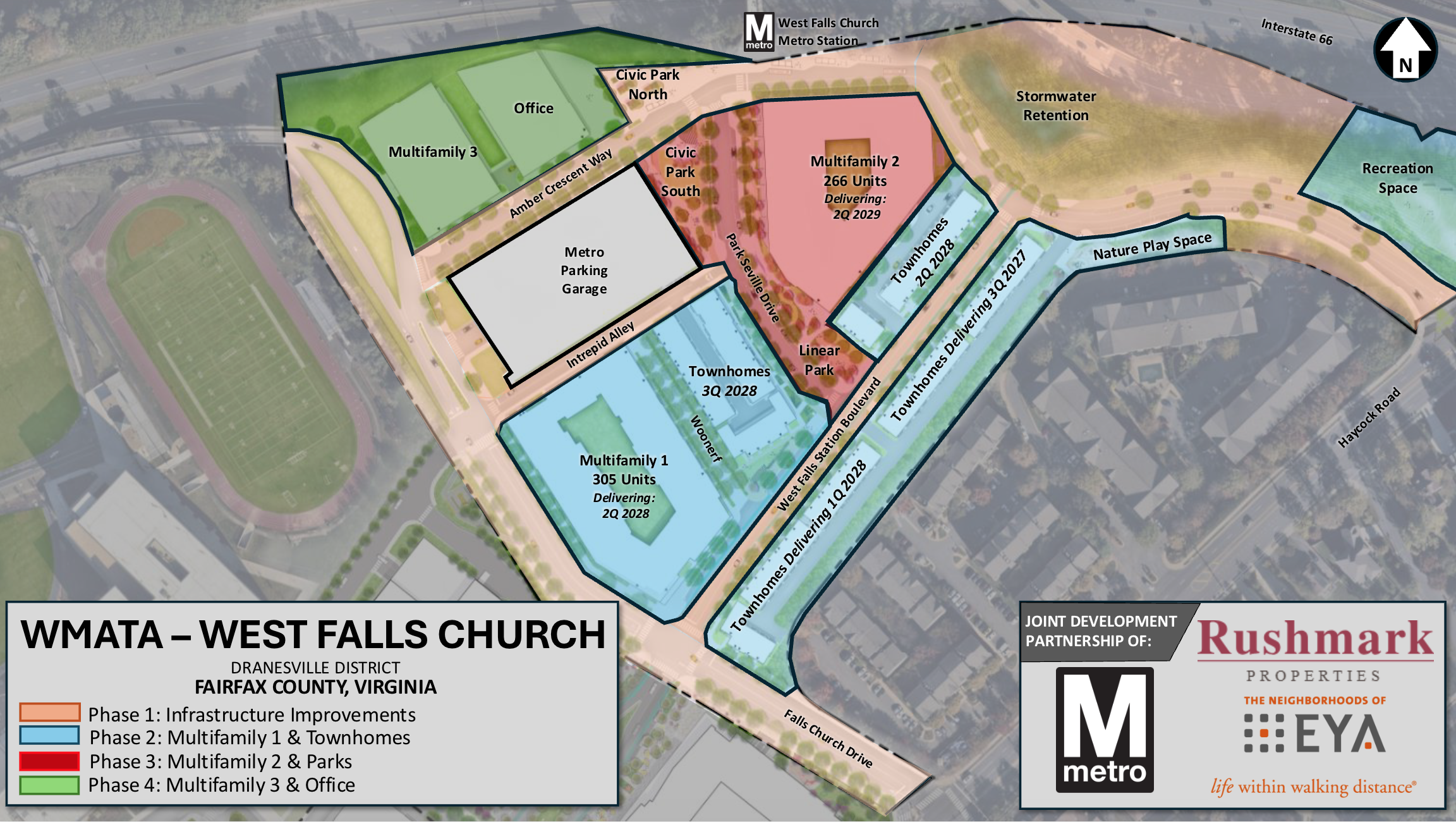
It also includes a new street grid with improved pedestrian, bike, and bus access. New public spaces like civic plazas, pocket parks, and a dog play area will also be created.
The first phase will open with townhomes starting in 2027 and apartments in 2028.
"Groundbreakings are about new beginnings, and West Falls Church is set for an exciting new chapter,”said Metro General Manager Randy Clarke. “With the Silver Line’s arrival, these lots became underused, creating an opportunity to build a community steps from the station. When we build more housing near transit, the entire region benefits -- from growing ridership to reducing traffic congestion to creating better quality of life opportunities and more access to jobs and entertainment.”
The project complements two other recent transformations totaling nearly 42 acres around the Metrorail station: West Falls and the Virginia Tech Northern Virginia Center, which includes the new the HITT headquarters.
"Today is not just about breaking ground, it’s about laying the foundation for the next generation,” said Neal Kumar, Vice President of Rushmark Properties. “We are proud to improve this land and build homes and offices where families will grow, businesses will thrive, and communities will connect for decades to come.”
“This moment has been more than a decade in the making, beginning with an Urban Land Institute’s Technical Assistance Panel that reimagined how this area could grow,” said Evan Goldman, Executive Vice President at EYA. “With the redevelopment of the Metro parcel now underway, we’re completing a walkable, mixed-use neighborhood that reflects true public-private partnership — delivering housing, infrastructure, and public spaces that strengthen our region for generations to come”
"This project will bring so many benefits to the local neighborhood, and I am thrilled to see WMATA break ground on it,” said Rep. Don Beyer. “Enhancing accessibility and making use of underutilized spaces at the station will be a great boost for the local neighborhood and Metro riders. I look forward to realizing the promise of these and other transit infrastructure improvements.”
"This groundbreaking marks an exciting step forward for Fairfax County, reinforcing our commitment to vibrant, connected communities,” said Fairfax County Board of Supervisors Chair Jeffrey McKay.” Projects like this help build a more inclusive and accessible Fairfax County, providing spaces where neighbors can thrive and our local economy can grow."
“By transforming 24 acres of Metro-owned land into a vibrant, walkable, mixed-use neighborhood, this community will have a new place where people can live, work, and connect—without needing a car for every trip,” said Metro Board Member and Fairfax County Supervisor Walter Alcorn. “This redevelopment - with new homes, offices, retail, and public spaces - shows what’s possible when Metro, Fairfax County, and our partners unite around a shared vision for smart, transit-oriented growth that benefits our residents, our economy, and our region.”
“Congratulations to Metro and Falls Church Gateway Partners on kicking off their redevelopment project in the West Falls Church transit station area,”said Fairfax County Board Supervisor James Bierman Jr. “This transformative project will deliver a dynamic new neighborhood that takes advantage of the access to the one of the busiest rail systems in the country and will provide enhanced pedestrian and bicycle connectivity for the broader community to access the station area and new amenities and open spaces.”
This development will replace 600 extra parking spaces. More than 1,400 parking spaces will remain. Metro will also reconfigure the bus bays and Kiss and Ride spaces as part of the project’s new street grid.
Follow along with developments at the West Falls Church development project website.
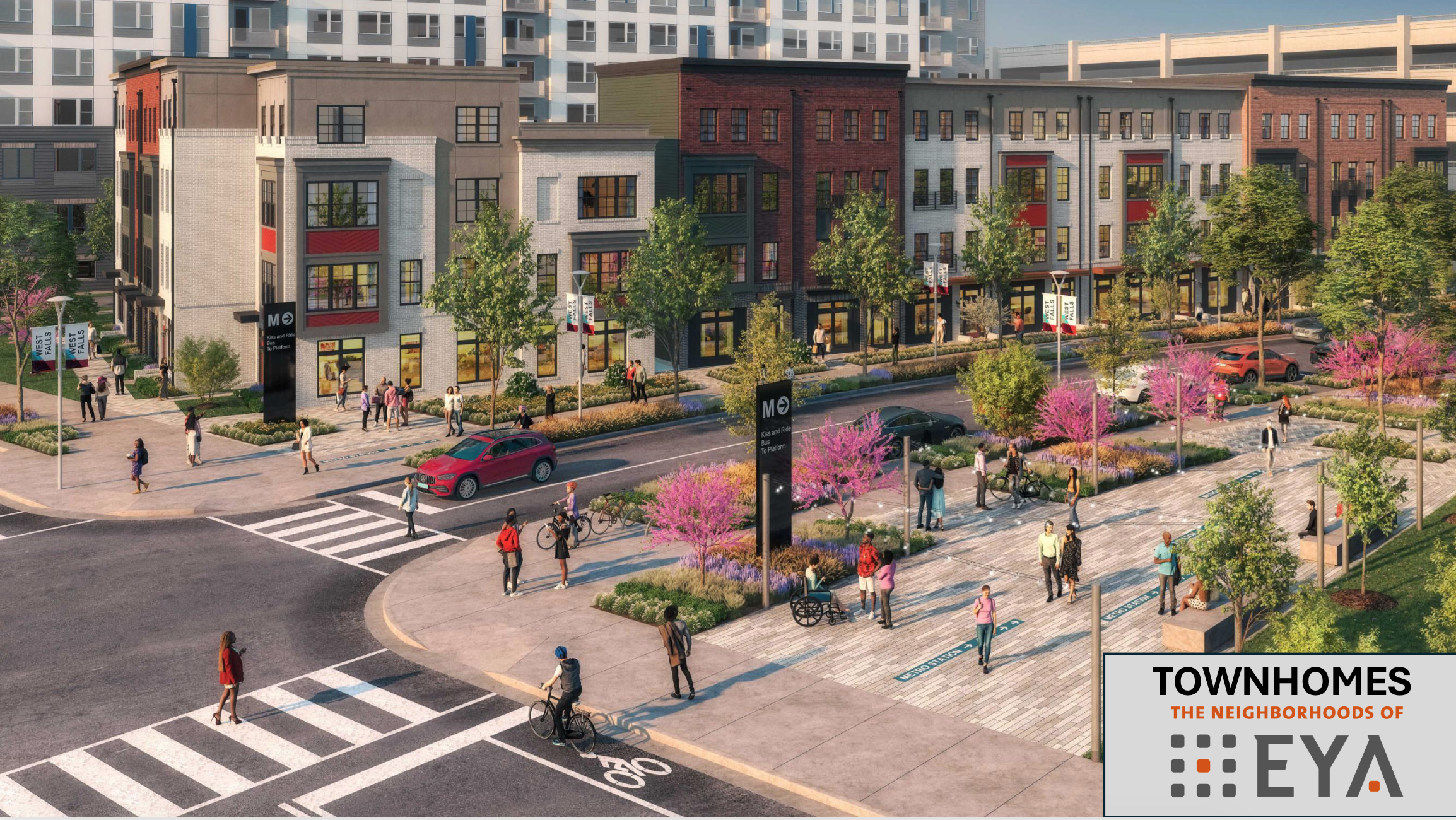
A rendering of the townhomes, new streetscape, and wayfinding near West Falls Church.
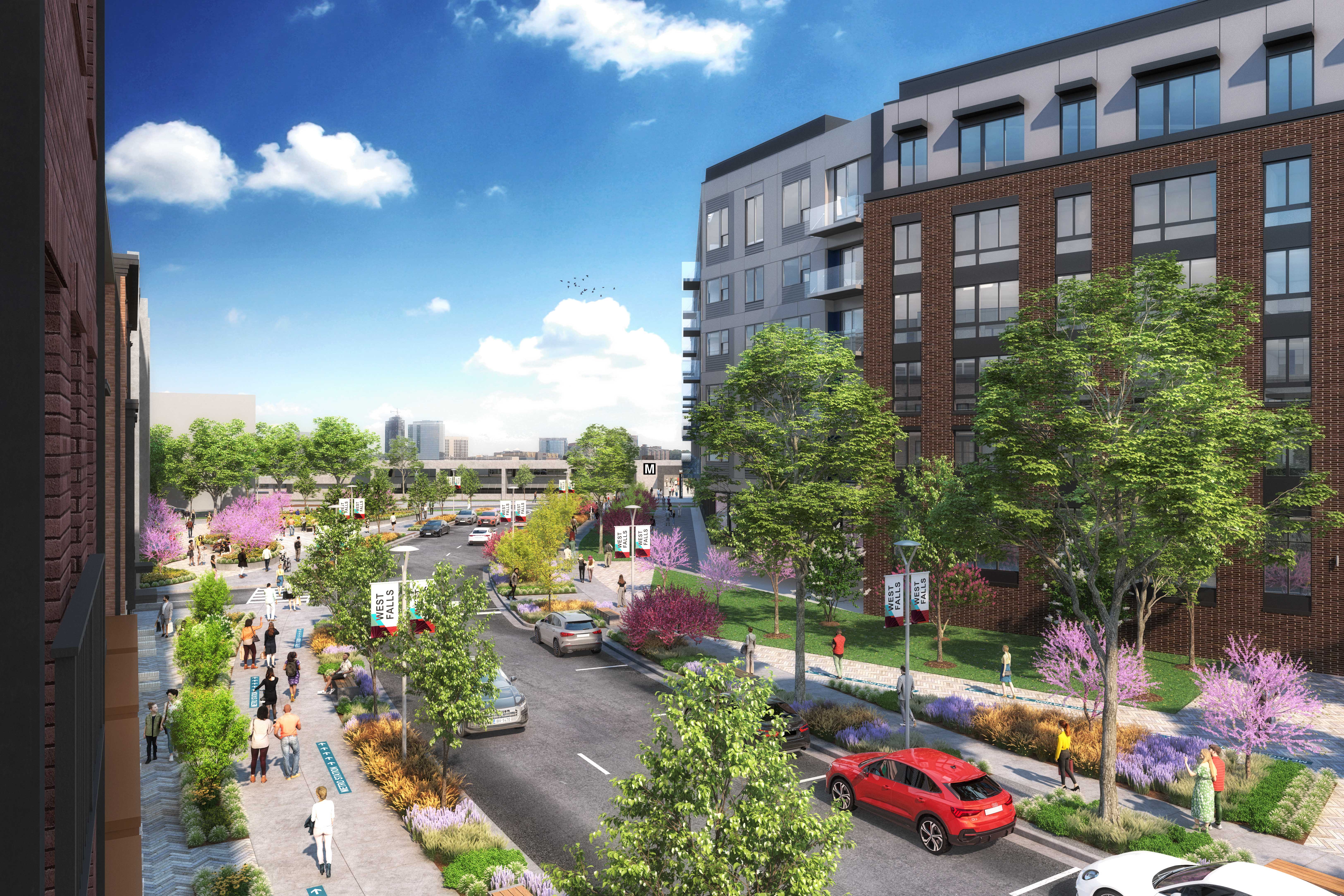
A rendering of the multifamily apartment building near West Falls Church.
About Metro
The Washington Metropolitan Area Transit Authority (WMATA), known as Metro, is the region’s leading public transportation provider, serving a population of approximately four million people across Washington, D.C., Maryland, and Virginia within a 2,054-square-mile jurisdiction. With a network of six rail lines, 98 stations, 125 bus routes, and a door-to-door paratransit service, Metro is the second busiest transit system in the United States with a $5 billion operating and capital budget. Since 2022, Metro has completed multiple transit-oriented development projects that have brought $15 million in tax revenue to the region from housing, office, and retail space in our community. Safety and security are a priority at Metro. Over 30,000 cameras monitor the system, and Metro is currently at an 8-year crime low with fare evasion down 82%. In 2025, the American Public Transportation Association (APTA) named Metro the Transit Agency of the Year in recognition of industry-leading ridership growth, record high customer satisfaction, a newly redesigned bus network, expanded rail service, and improved customer experience.